The Complete Beginner's Guide to Buying Your First Jet Ski
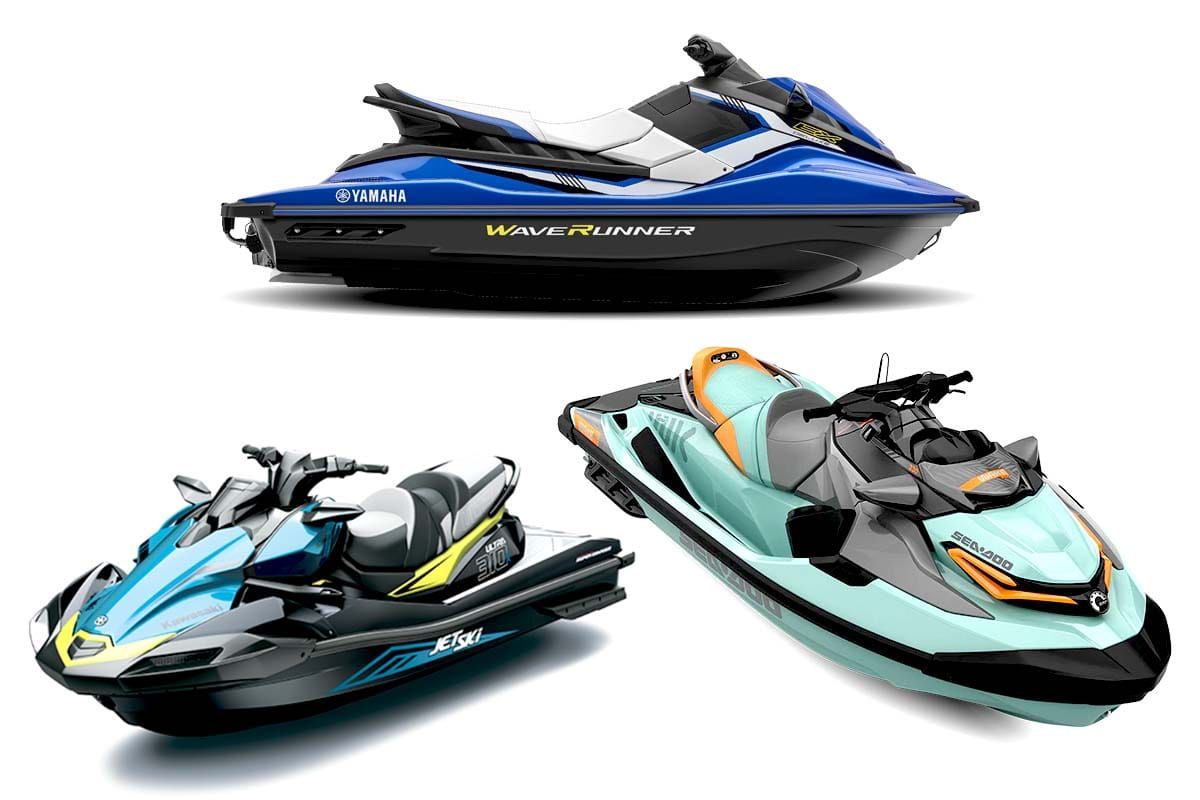
So you've decided you want a jet ski. Maybe you rode one on vacation and couldn't stop thinking about it. Maybe you've been watching videos online for months. Whatever brought you here — welcome. Buying your first personal watercraft (PWC) is one of the best decisions you'll make, but it's also one where a little knowledge goes a long way.
This guide covers everything you need to know before you spend a dollar: the brands, the budget, new vs. used, what to inspect, and what nobody tells you until it's too late. (Remember, this is solely the opinion of Open Water Magazine; you should talk with your local dealer first)
First, let's talk budget — and be honest about it
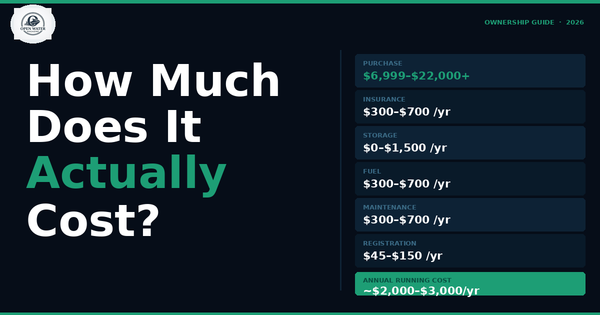
The sticker price on a jet ski is just the beginning. Here's a realistic picture of what first-year ownership actually costs:
- New PWC: $9,000 – $20,000+, depending on model
- Used PWC (good condition): $4,000 – $10,000
- Trailer: $800 – $2,500 (if not included)
- Registration: $50 – $150/year, depending on your state
- Insurance: $200 – $500/year for recreational use
- Storage (if you don't have space): $500 – $1,500/year
- First season maintenance: $200 – $400
If you're on a tight budget, a well-maintained used ski in the $4,000–$6,000 range is the smartest move. You'll learn the machine, figure out what you actually want, and not lose sleep over every dock bump.
The three brands — and how they're different
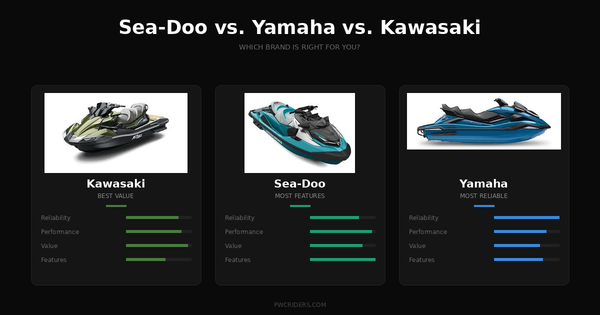
Almost every jet ski on the water comes from one of three manufacturers. Here's the honest breakdown:
Sea-Doo (Bombardier-BRP)
Sea-Doo is the most innovative brand in the space. They consistently push new technology — intelligent braking, reverse systems, LinQ accessories — and they have the widest model lineup from entry-level to performance. If you want something modern and feature-packed, Sea-Doo is hard to beat. Parts and dealers are widely available across the country.
Yamaha WaveRunner
Yamaha is known for reliability above everything else. Their engines have a reputation for lasting longer with less fuss, and the WaveRunner lineup is straightforward to maintain. If you're buying used and want peace of mind, a Yamaha is often the safer pick. They're not the flashiest, but they're workhorses.
Kawasaki Jet Ski
Fun fact: "Jet Ski" is actually a Kawasaki trademark, though most people use it as a generic term. Kawasaki's lineup is smaller than the other two brands, but their STX and Ultra models have a loyal following — especially among riders who prioritize value. Parts can be slightly harder to find in some areas.
Bottom line: For a first-time buyer, you can't go wrong with any of the three. Buy the one in the best condition at the best price.
New vs. used — which is right for you?
Buy new if:
- You want full warranty coverage and zero surprises
- You plan to keep it long-term
- You're buying a performance model where condition history really matters
- You can comfortably absorb the depreciation (new PWCs drop in value fast)
Buy used if:
- Budget is a primary concern
- You're not sure how much you'll actually use it
- You're comfortable doing a pre-purchase inspection (or paying for one)
- You want to get on the water sooner rather than later
A 2–4 year old ski from a careful owner is often the sweet spot. The original owner took the depreciation hit, but the machine is still modern enough to have current features and parts availability.
What to inspect before you buy used
Never buy a used PWC without checking these things — or having a mechanic check them for you:
Hours on the engine. Most recreational riders put 50–100 hours per year on a ski. Under 100 total hours is low. Over 300 starts to warrant closer inspection. Most modern PWCs show hours on the digital display.
Hull inspection. Look for cracks, repairs, or fiberglass damage — especially around the bow and the pump intake. Turn it over if you can. Gelcoat scratches are cosmetic; structural cracks are not.
Intake grate and impeller. Pop off the intake grate (usually a few bolts) and look at the impeller blades. Nicks and dings reduce performance and can indicate the ski was run in shallow water or sucked up debris. A damaged impeller is a few hundred dollars to replace.
Check for water in the hull. Open the engine compartment and look for signs of flooding or waterlogged foam. Tilt the ski and listen/feel for water sloshing. Some bilge water is normal; a lot of water is not.
Run it in water. Always do a water test before buying. Check that it starts easily, accelerates smoothly, and that reverse (if equipped) works. Listen for any unusual noises at idle and at speed.
Don't forget the trailer
A jet ski without a trailer is a ski that goes nowhere. If the seller doesn't include one, budget $800–$2,500 for a single-place trailer depending on quality.
Things to check on a used trailer: the condition of the bunk carpeting or rollers (they wear out and can scratch your hull), the wiring harness and lights, the coupler and safety chains, and the condition of the tires — trailer tires sit for long periods and can crack even when they look okay. Check the tire date code stamped on the sidewall; tires over 5–6 years old should be replaced regardless of tread depth.
A few things nobody tells you
Saltwater costs more to own. If you ride in salt water, you need to flush the engine and cooling system after every single ride. It adds 15 minutes to your day but saves you thousands in corrosion damage over time.
Supercharger maintenance is real. High-performance 4-stroke PWCs (Sea-Doo RXT/RXP, Yamaha FZR/FZS, Kawasaki Ultra) have superchargers that require rebuild or replacement on a schedule — usually every 50–100 hours. Know this going in if you're buying a performance ski.
Storage matters more than you think. Winterizing and properly storing a PWC is the difference between a machine that lasts 20 years and one that needs a top-end rebuild after five. Learn the process or pay a dealer to do it.
Your state requires a boater education card. Most states require PWC operators to complete a boater safety course. It's usually a few hours online and costs around $30. Don't skip it — it's genuinely useful and legally required.
So, what should you actually buy?
If you're a first-time buyer on a moderate budget, here's a solid starting point: a 3-cylinder, non-supercharged Yamaha VX or Sea-Doo GTI from the last five years with under 150 hours. These machines are reliable, relatively simple to maintain, have parts everywhere, and are fun without being so fast they'll scare you. They hold value reasonably well, too.
Once you've put a season on a mid-range ski and know what you love about riding, you'll have a much better idea of whether you want to go faster, go bigger, or stay exactly where you are.
If you enjoyed this article, be sure to sign up for our newsletter for more content weekly!