How Much Does It Actually Cost to Own a PWC?
Everything in this article is based on personal experience, community knowledge, and publicly available data. Costs vary widely by region, usage, and model. Always get real quotes from local dealers, insurers, and storage facilities before making any financial decisions.
The sticker price on a PWC is the number everyone focuses on. It's the number on the dealer's website, the number you type into the financing calculator, and the number you nervously text your spouse. But here's what nobody tells you upfront — that number is just the beginning.
By the time you factor in insurance, storage, fuel, maintenance, registration, and the gear you'll need, the true annual cost of PWC ownership is quite a bit higher than most people budget for going in. That's not a reason to avoid buying one — it's just information you deserve to have before you sign anything.
Here's the honest breakdown.
The purchase price
First, let's establish the baseline. New PWCs in 2026 range from around $6,999 for a base Sea-Doo Spark all the way to $22,000+ for a fully loaded performance or luxury model. Most beginner-friendly three-passenger skis land somewhere between $10,000 and $14,000 new.
Used skis can cut that number significantly. A well-maintained 3–5 year old ski from a private seller typically runs $5,000–$9,000 depending on the model, hours, and condition. If budget is tight, the used market is where the real value lives — but always get a pre-purchase inspection before you hand over any money.
What to budget: $6,999–$14,000 for a new beginner ski. $4,000–$8,000 for a solid used option.
Trailer
Unless you're keeping your ski at a marina full-time, you need a trailer. A single-place trailer for a standard sit-down PWC runs $800–$2,500 new depending on quality. Budget-friendly options exist, but don't go too cheap — a trailer failure on the highway is no joke.
If you're buying a used ski, ask if a trailer is included. Many private sellers will bundle one in, which can save you $1,000–$1,500 right off the bat.
What to budget: $800–$2,500 one-time cost (or free if bundled with a used ski).
Registration
Every state requires you to register your PWC, and most require trailer registration separately. Registration costs vary quite a bit by state — some states charge as little as $25 per year while others charge over $100. A few states have also added fees for aquatic invasive species prevention in recent years, so check your specific state's requirements.
What to budget: $45–$150 per year depending on your state.
Insurance
This is one of the costs new buyers most commonly underestimate. PWC insurance is strongly recommended even in states where it isn't legally required — and if you're financing the ski, your lender will require it.
Basic liability-only coverage starts around $280–$320 per year for a clean record. Comprehensive coverage — which includes theft, storm damage, and accident protection — typically runs $400–$700 per year for a recreational mid-range ski. Factors like your age, location, riding history, and the value of the ski all affect your rate.
One tip: many insurers offer discounts of around 15% if you've completed a boating safety course, which you're likely required to take anyway in most states.
What to budget: $300–$700 per year. Get at least three quotes before committing.
Storage
This one catches a lot of people off guard, especially in northern states where you can't leave a ski outside year-round.
If you have a garage or covered space at home, storage is essentially free — just make sure the ski is properly winterized and covered. If you don't have that option, you're looking at:
- Outdoor uncovered storage: $40–$70/month
- Outdoor covered storage: $60–$100/month
- Indoor heated storage (recommended in cold climates): $150–$220/month
For a full 12-month storage situation, that's anywhere from $480 to over $2,600 per year. In Nebraska and other Midwest states, indoor winter storage is the smart move to protect your investment from freeze damage.
What to budget: $0 if you have home storage. $500–$1,500/year if you don't.
Fuel
A PWC can be thirstier than people expect, especially if you like to ride hard. A recreational naturally aspirated ski burns roughly 4–7 gallons per hour at moderate speeds. A supercharged performance ski can burn significantly more. Most casual riders put in 25–50 hours per year on the water.
At current fuel prices, expect to spend somewhere between $10 and $20 per hour of riding depending on your ski and how aggressively you ride. Over a 30-hour season, that's roughly $300–$600 in fuel.
One heads up — marina fuel is almost always more expensive than roadside gas stations, sometimes by $1–$2 per gallon. Fill up before you tow when you can.
What to budget: $300–$700 per year for moderate recreational use.
Routine maintenance
Like any engine, a PWC needs regular attention to stay reliable. Annual maintenance on a naturally aspirated ski is fairly straightforward and affordable. Supercharged performance skis cost more to maintain and have additional service intervals to stay on top of.
Here's what routine annual maintenance looks like:
- Annual service (oil change, spark plugs, filters, impeller check): $150–$400 at a dealer, or much less if you DIY
- Winterization: $150–$300 at a dealer. This is critical in cold climates and skipping it can cause serious engine damage
- Miscellaneous (belts, wear ring, misc. parts): $50–$200
For supercharged models, add a supercharger rebuild every 100 hours or so — that service runs around $500–$800 at a dealer and is non-negotiable if you want the engine to last.
What to budget: $300–$700 per year for a naturally aspirated ski. $600–$1,200+ for a supercharged model.
Gear and accessories
You need some gear before you ever hit the water. The basics aren't expensive, but they add up:
- Life jackets (one per rider): $50–$150 each for a quality PFD
- Wetsuit or rash guard: $40–$150
- Tow rope: $30–$60
Figure $200–$500 for a solid first-season gear setup. Most of it lasts for years, so this is mostly a one-time cost.
What to budget: $200–$500 upfront, minimal ongoing cost.
The full picture: Year one vs. ongoing
Here's how it all adds up for a typical first-time buyer who purchases a used mid-range ski:
Year one (used ski, $6,000 purchase price):
| Cost | Amount |
|---|---|
| Used ski | $6,000 |
| Trailer (if needed) | $1,200 |
| Registration | $100 |
| Insurance | $500 |
| Storage (if needed) | $800 |
| Fuel (30 hrs) | $450 |
| Maintenance + winterization | $400 |
| Gear | $350 |
| Year one total | ~$9,800 |
Ongoing annual costs (after year one):
| Cost | Amount |
|---|---|
| Registration | $100 |
| Insurance | $500 |
| Storage (if needed) | $800 |
| Fuel | $450 |
| Maintenance | $400 |
| Annual total | ~$2,250/year |
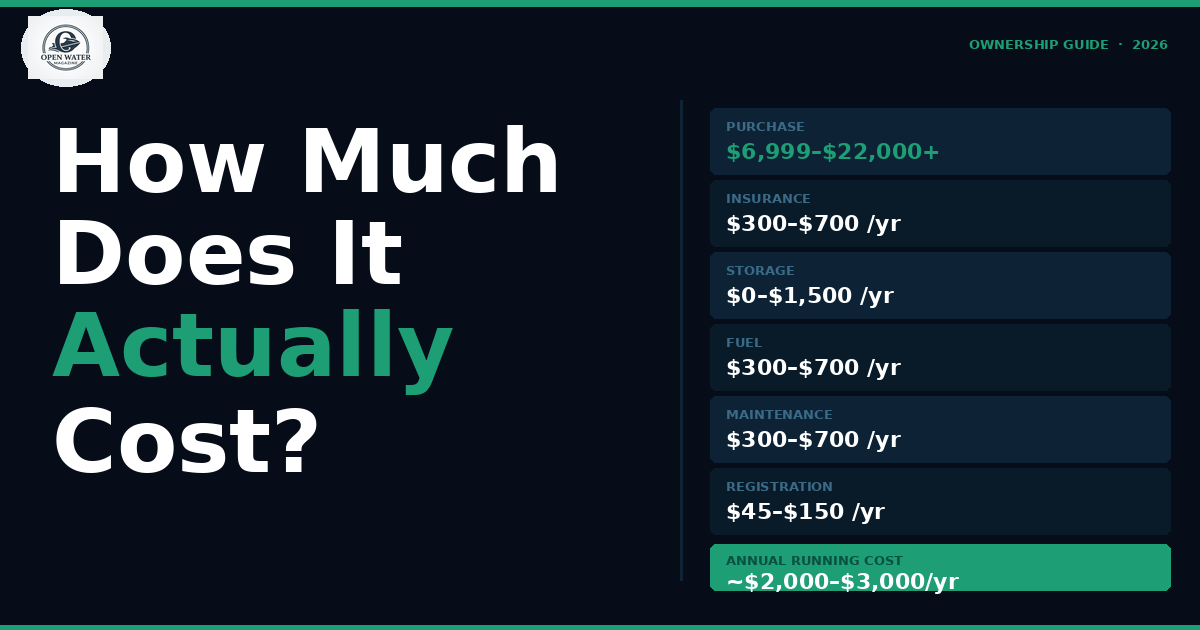
That's roughly $2,000–$3,000 per year to keep a PWC on the water after the initial purchase — or about $60–$100 per ride if you're out 30 times a season.
Is it worth it?
That depends entirely on how much you'll use it. If you're on the water 20–40 days a season, the cost per ride drops to a very reasonable number and ownership makes a lot of sense versus renting. If you think you'll ride 5 times a year, renting is probably smarter math.
The honest advice: be realistic about how often you'll actually use it before you buy. Most new owners overestimate their usage in year one. That's not a reason not to buy — just go in with honest expectations and a full budget picture, and you won't be caught off guard.
Disclaimer: All costs in this article are estimates based on general community knowledge and publicly available data as of 2026. Actual costs vary significantly by region, model, usage, and individual circumstances. Always get real quotes from local dealers, insurance providers, and storage facilities before making any purchasing decisions.
If this helped you understand the real cost of PWC ownership, subscribe to Open Water Magazine for more honest PWC content every week!